The archives
The St. Lucie Record maintains a growing collection of articles on the history of St. Lucie County, Florida. From the ancient Ais people who fished the Indian River Lagoon to the modern rise of Port St. Lucie, our archive covers the full sweep of county history. Each article cites the record it rests on.
Browse the collection below, organized across our four main sections: Native History, Settlement Era, Modern Era, and Places & Landmarks. New articles are added regularly as our research continues.
Settlement Era
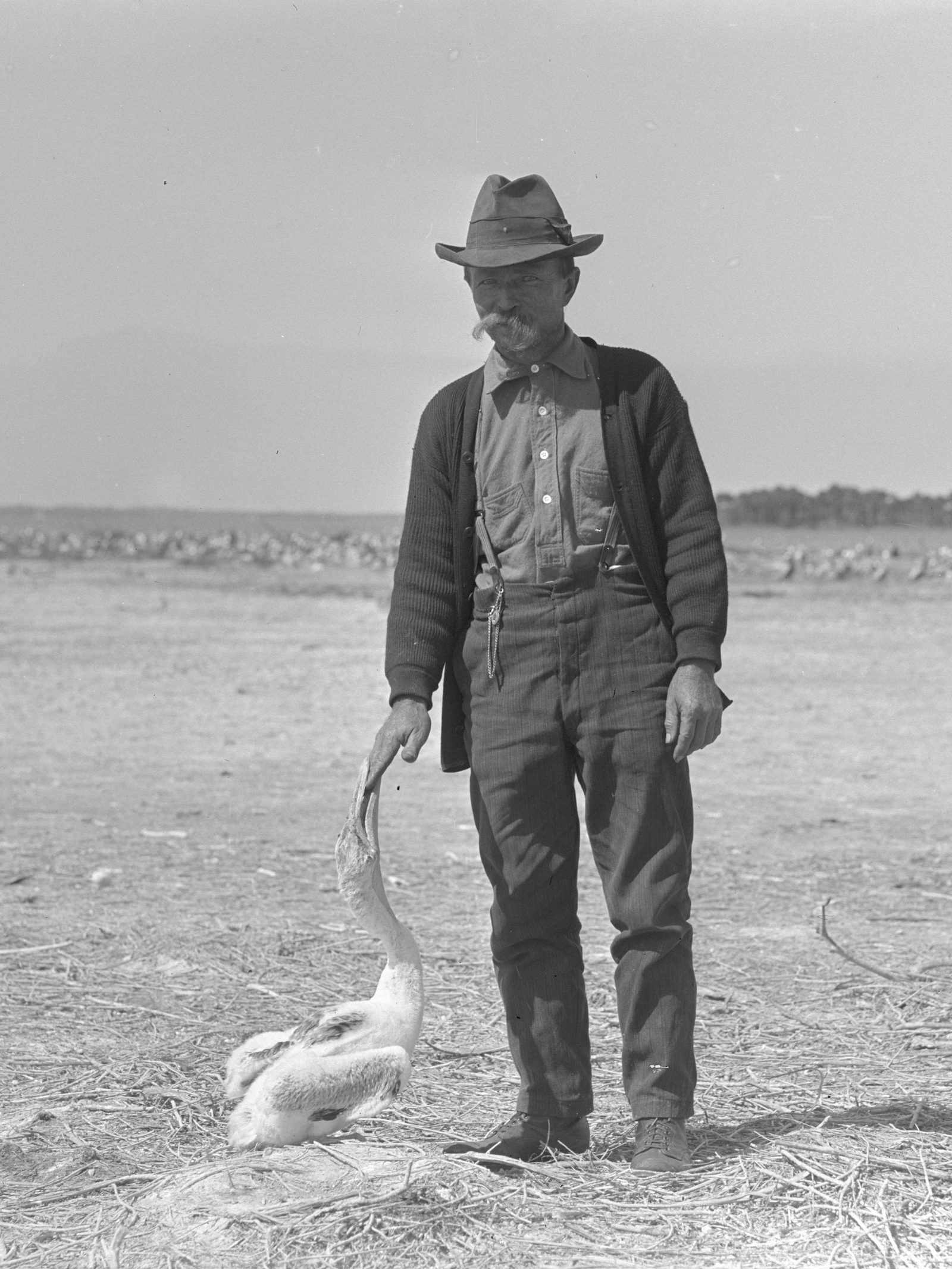
In 1903, German immigrant Paul Kroegel became the first warden of Pelican Island, America’s first National Wildlife Refuge, at one dollar per month. Two years later, he was appointed one of the five original commissioners of the newly created St. Lucie County. He belongs to both the county’s conservation history and its civic founding.
Settlement Era · Conservation · St. Lucie County History
Native History
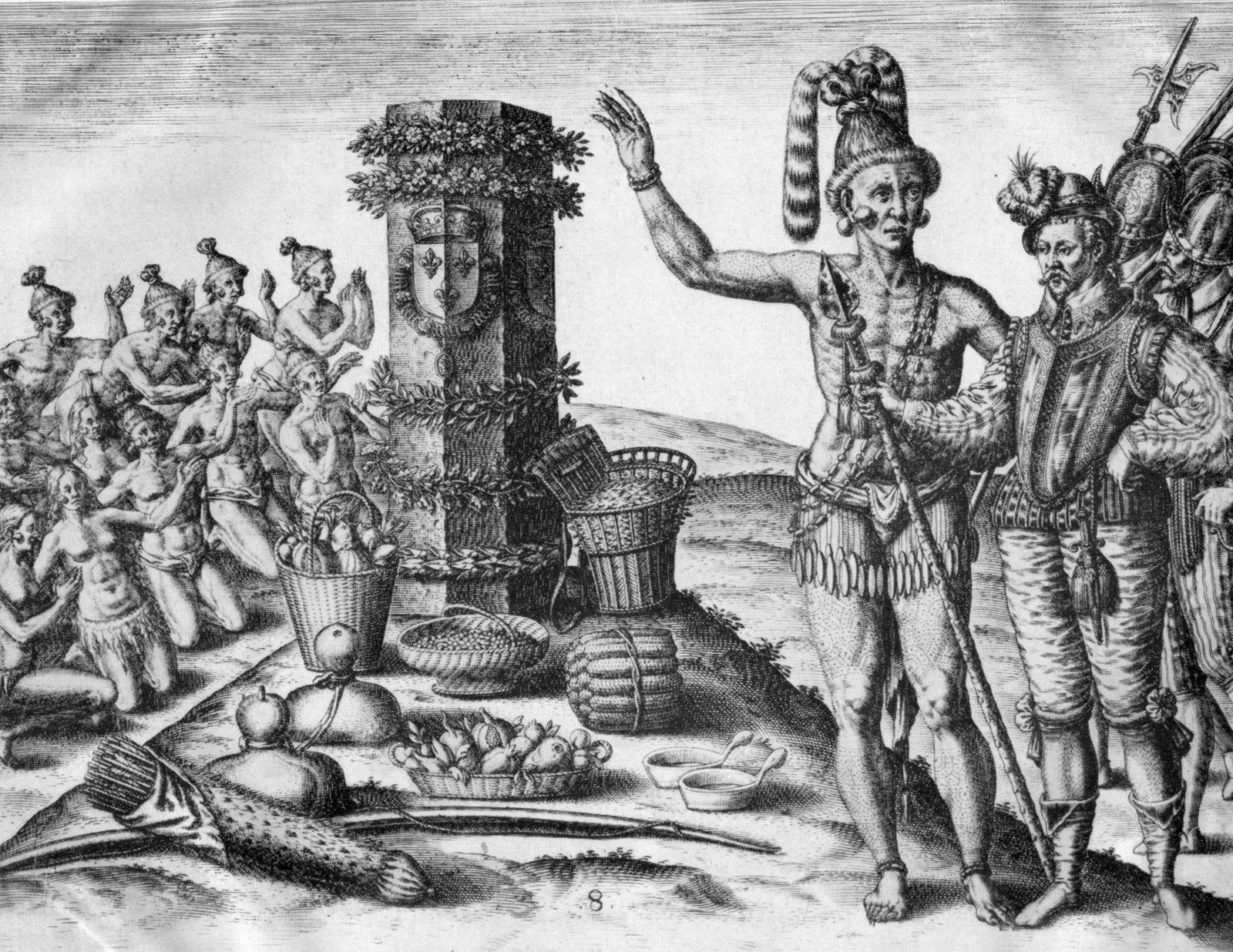
For at least two thousand years before European contact, the Ais people thrived along the Indian River Lagoon in what is now St. Lucie County. They built enormous shell middens, fished the rich estuarine waters, and maintained trade networks across the Florida peninsula. Spanish explorers encountered them in the sixteenth century, and Jonathan Dickinson’s 1696 journal provides one of the most vivid accounts of Ais life and culture.
Native History · Pre-Columbian Era · St. Lucie County History
Settlement Era
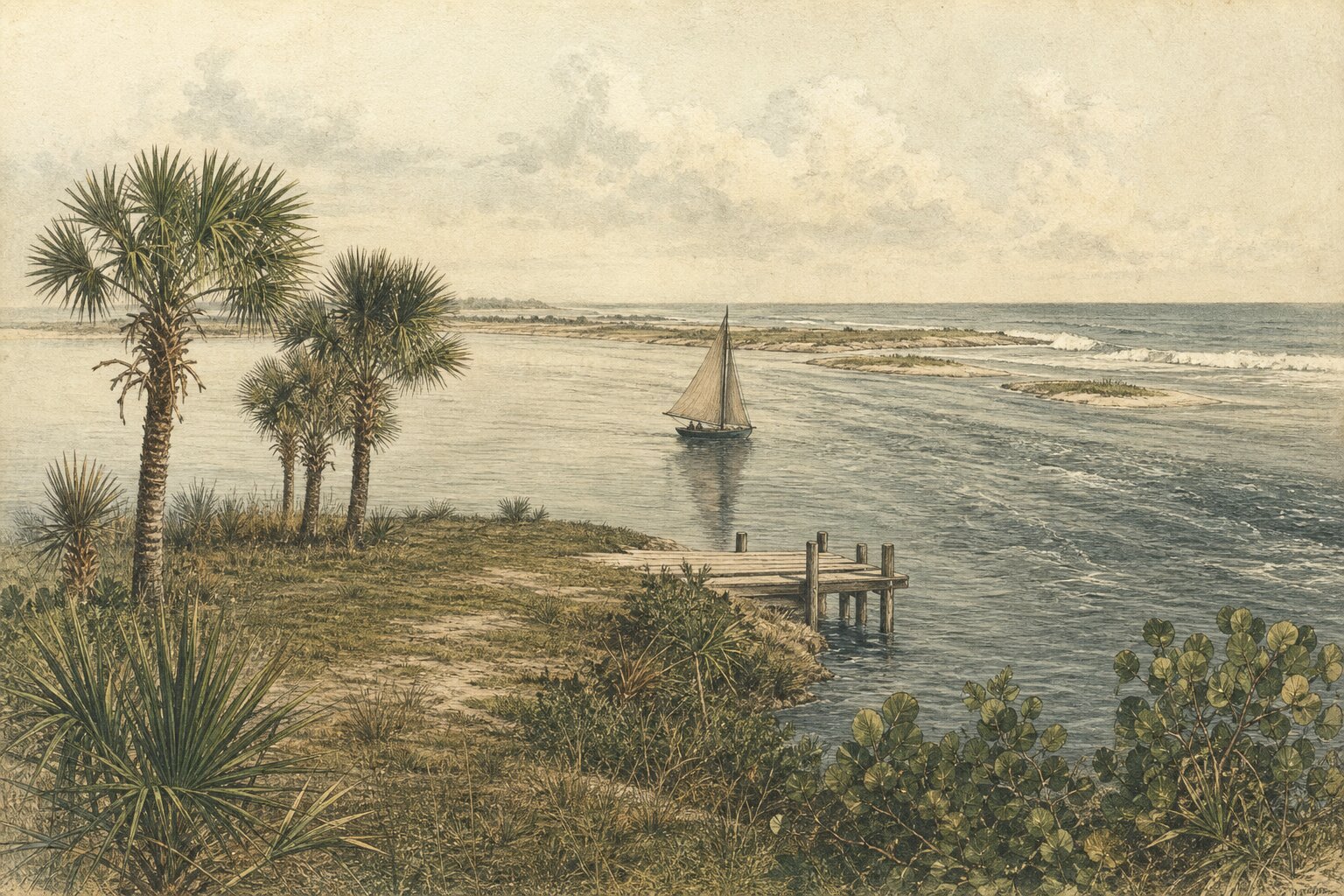
The settlers dug the St. Lucie Inlet themselves in 1892. For five years the county tried to make it a harbor: two cents a crate from the pineapple growers, a $1,400,000 plan from the engineers, a mass meeting on a congressman’s wire, a Senate primary fought on it, and a hurricane that did a little of the work Congress would not.
Settlement Era · Government · 1907 to 1911
Settlement Era
A man from Connecticut settled on the Indian River and called the spot Eden. His widow, the settlement’s pioneer citizen, died in December 1905, and her family’s packing houses, church entertainments and Easter parties fill its news to 1911.
Settlement Era · Towns · 1881 to 1911
Settlement Era
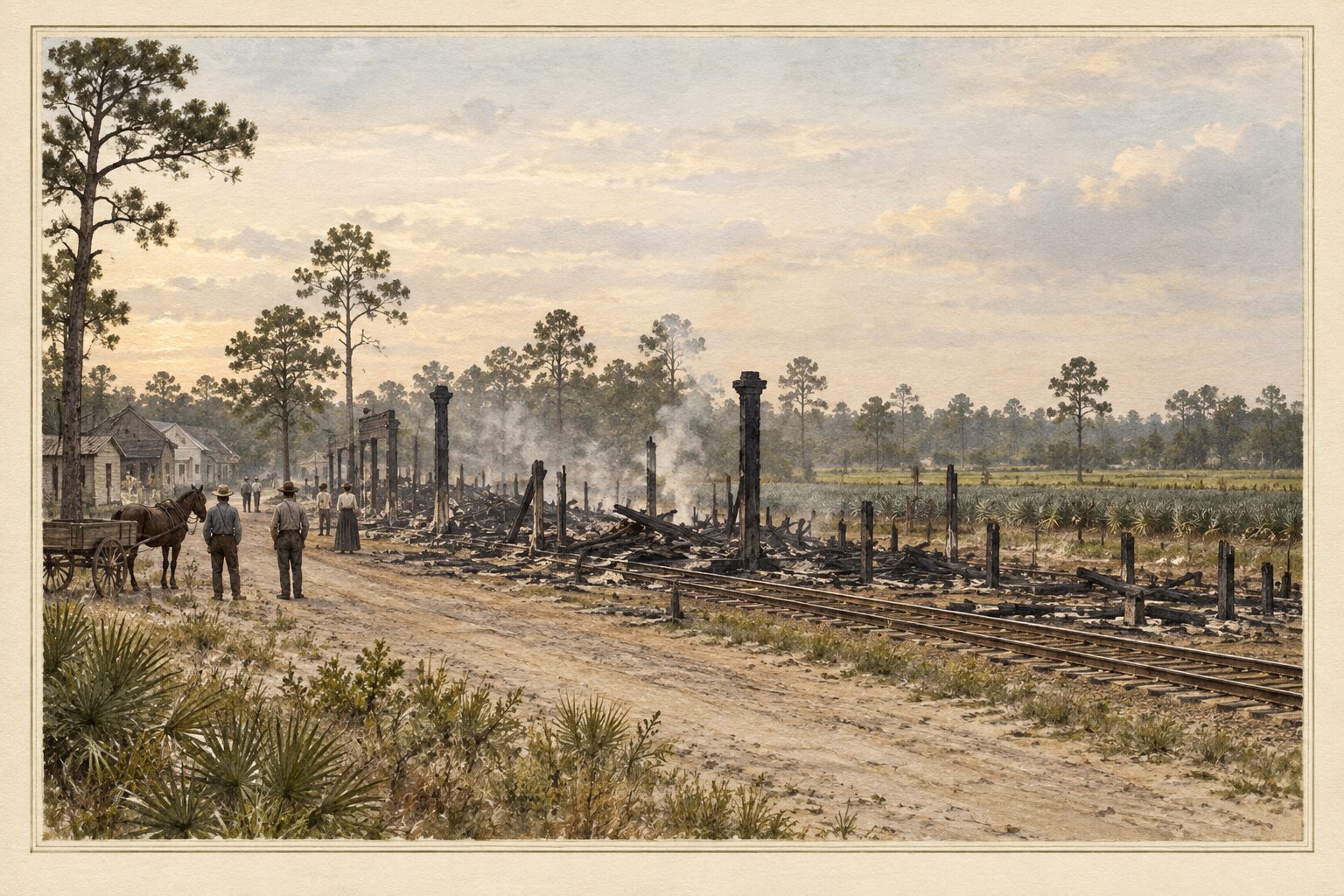
Early on Sunday, May 3, 1908, fire took the whole business section of Jensen: sixteen buildings, every store, the post office and the railway depot. Then the town waited through a summer without a station, until the railroad built it a new one in concrete.
Settlement Era · Towns · 1908 to 1909
Settlement Era
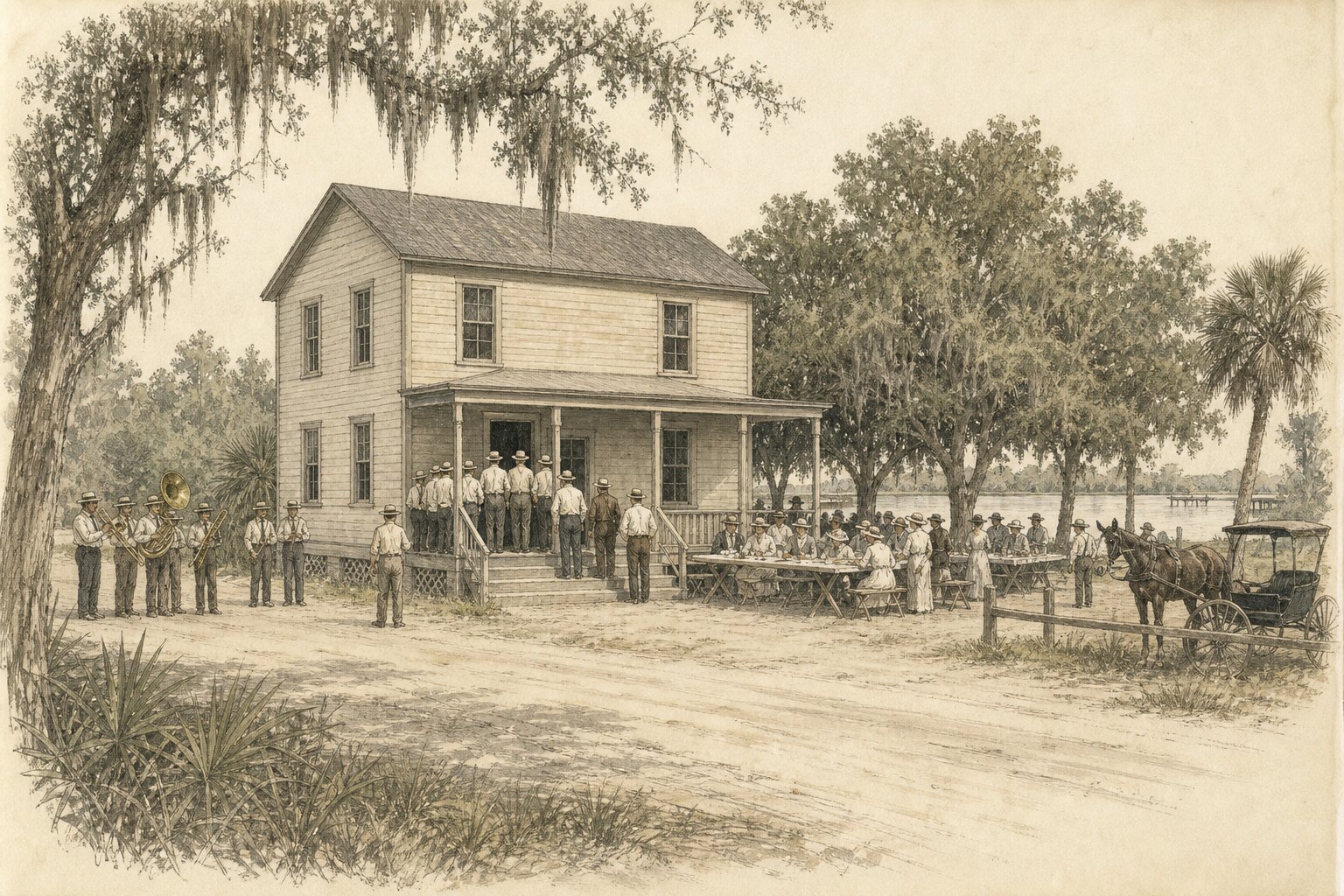
In August 1906 the year-old county voted 313 to 182 to close its saloons. A petition from Sebastian, a newspaper campaign with an election-eve extra, and an election day on which the women of Fort Pierce served two hundred free dinners beside the polls.
Settlement Era · Government · 1906
Native History
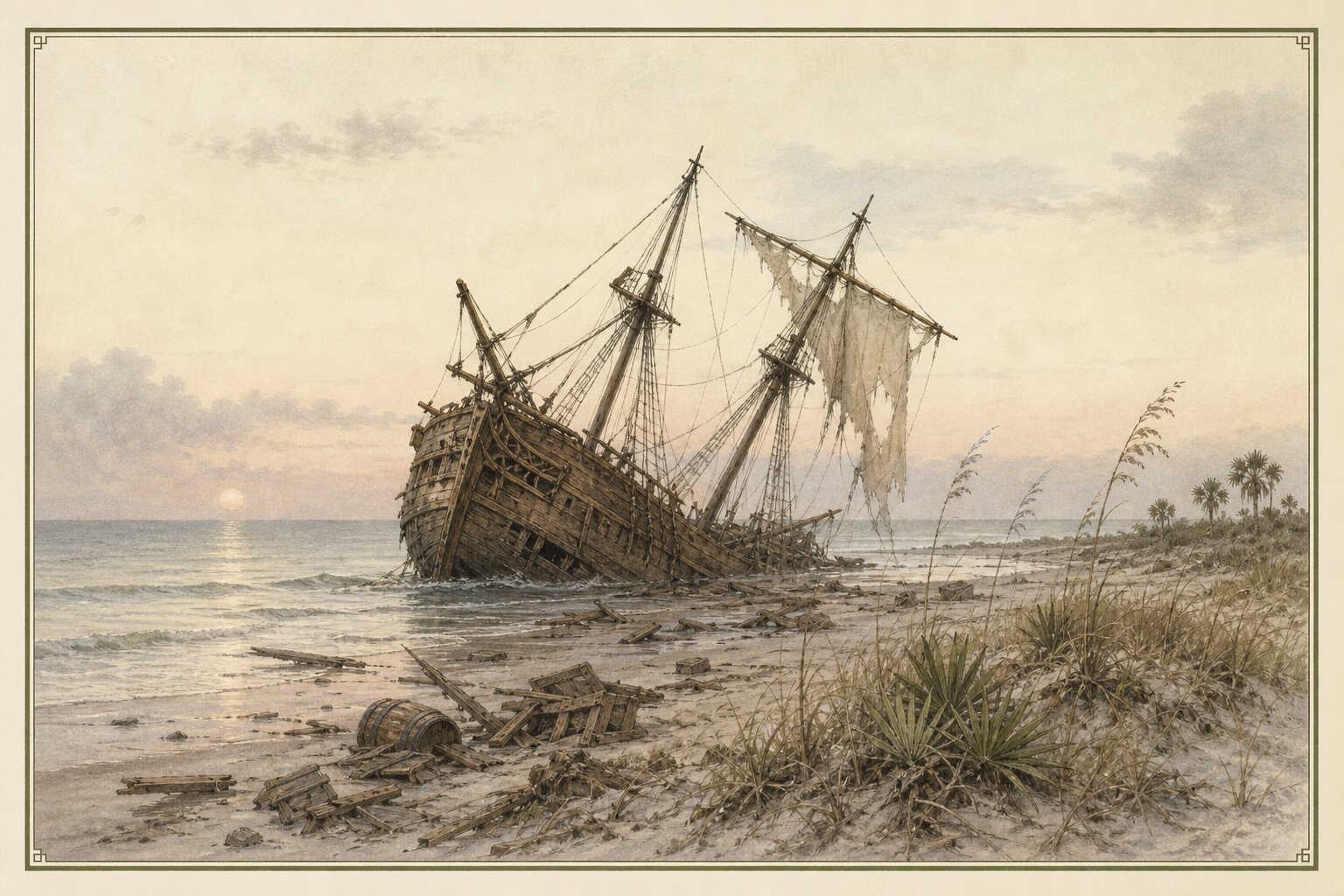
In September 1696 the barkentine Reformation went ashore near the Jupiter Inlet with some two dozen people aboard. The survivors walked and canoed north through Ais country to St. Augustine, and Jonathan Dickinson’s published journal of the ordeal became the fullest firsthand account of the people who ruled the St. Lucie coast.
Native History · Contact Era · 1696
Native History
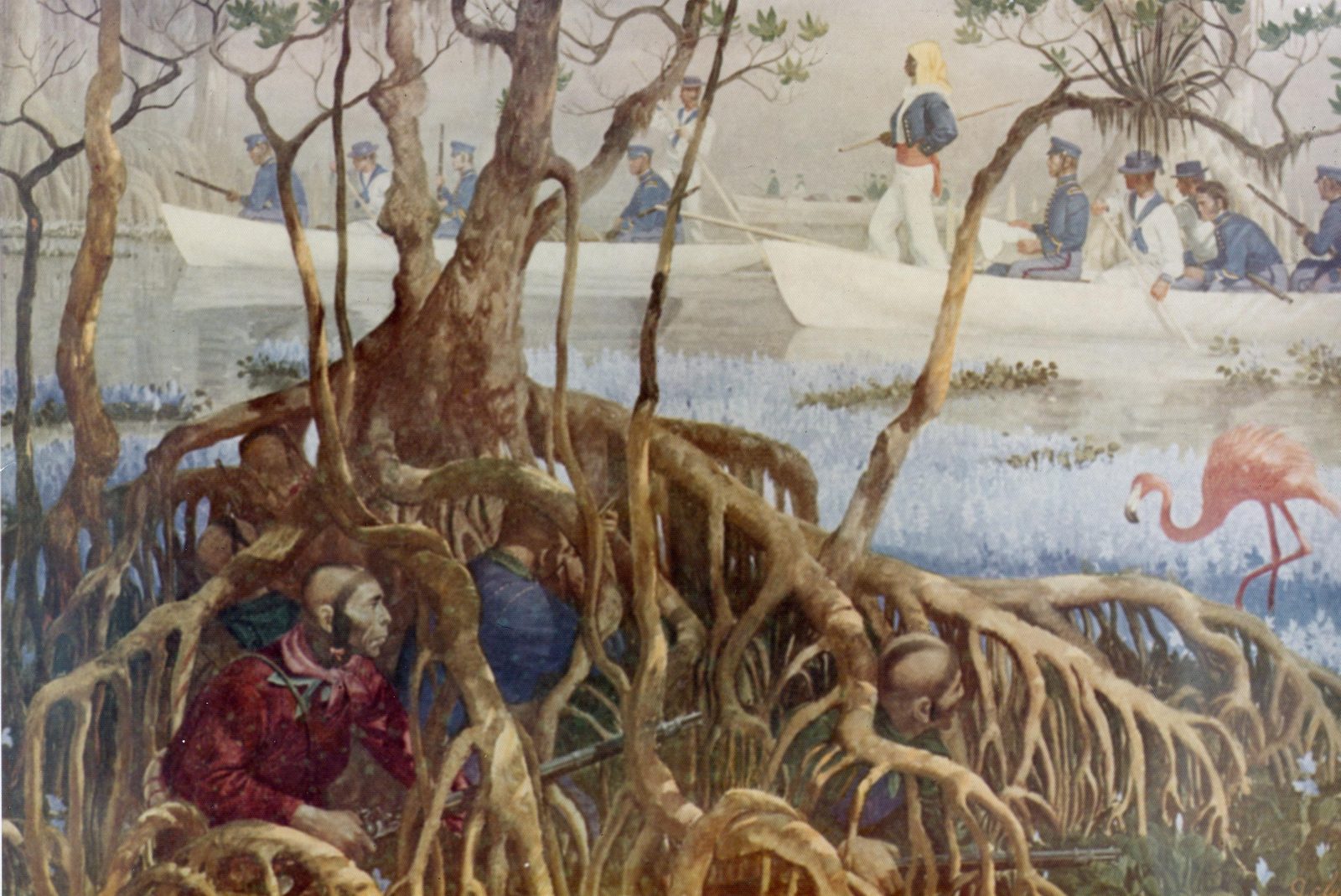
The Second Seminole War (1835–1842) brought the United States Army to the Indian River coast and established the military outpost that gave Fort Pierce its name. Named for Lieutenant Colonel Benjamin Kendrick Pierce, brother of President Franklin Pierce, the fort was part of a chain of outposts built to prosecute the war against the Seminole people. The military presence laid the groundwork for permanent settlement.
Native History · Military History · St. Lucie County History
Settlement Era
In 1905, the Florida Legislature carved St. Lucie County from the sprawling territory of Brevard County, giving the growing communities along the southern Indian River their own local government. Fort Pierce became the county seat. The new county would itself be subdivided in the decades ahead, Martin County, Indian River County, and Okeechobee County were all carved from its original territory.
Settlement Era · Government · St. Lucie County History
Settlement Era
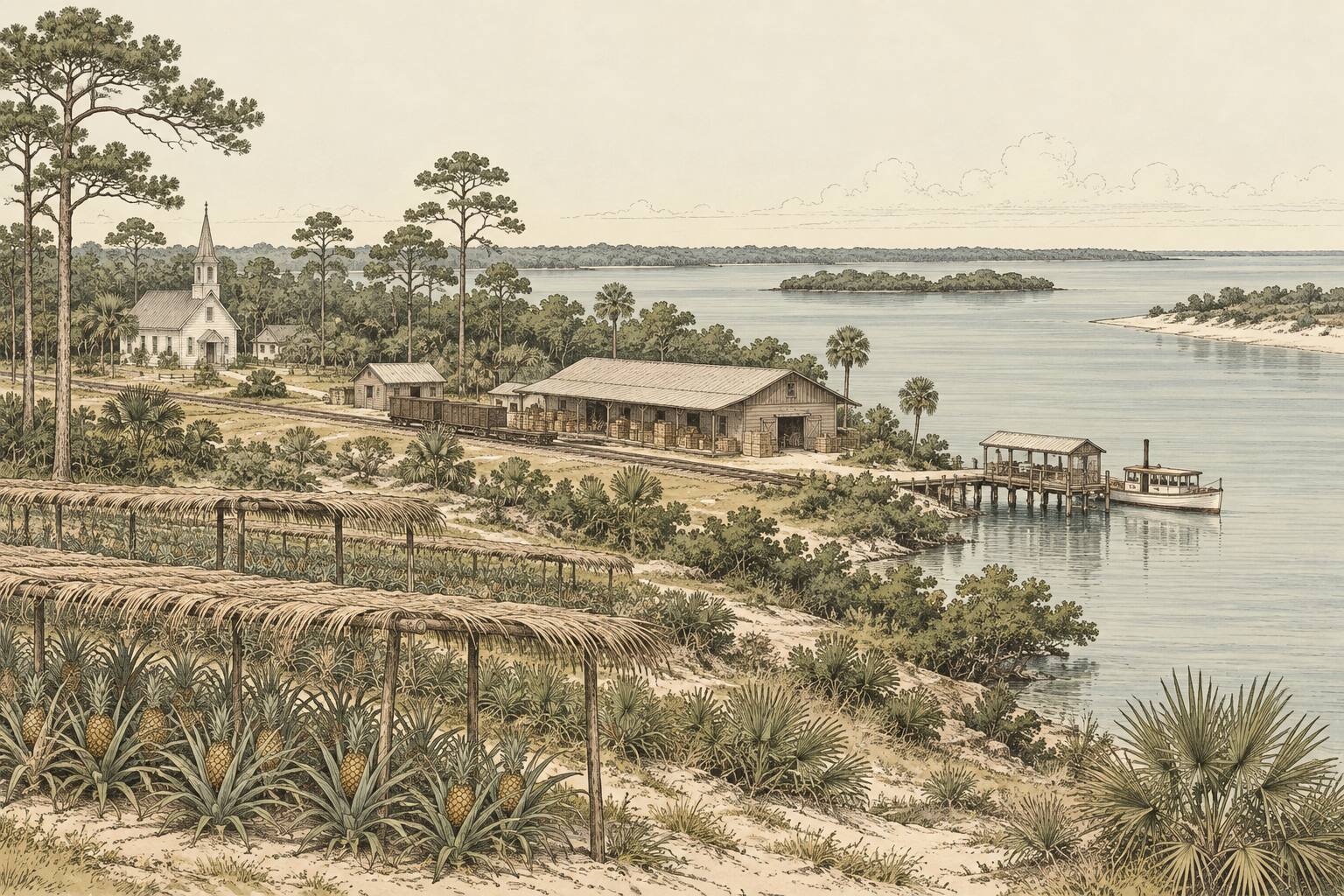
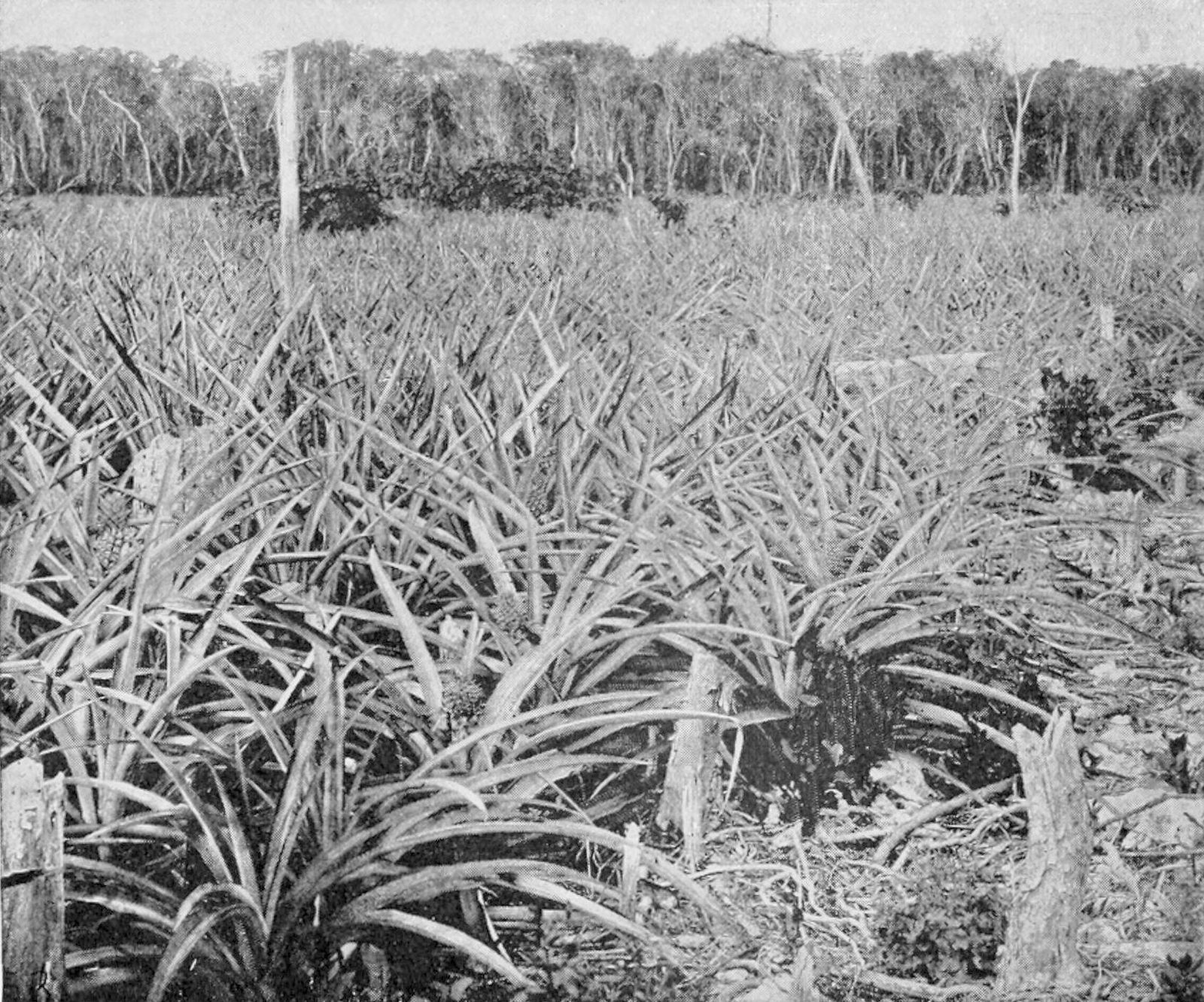
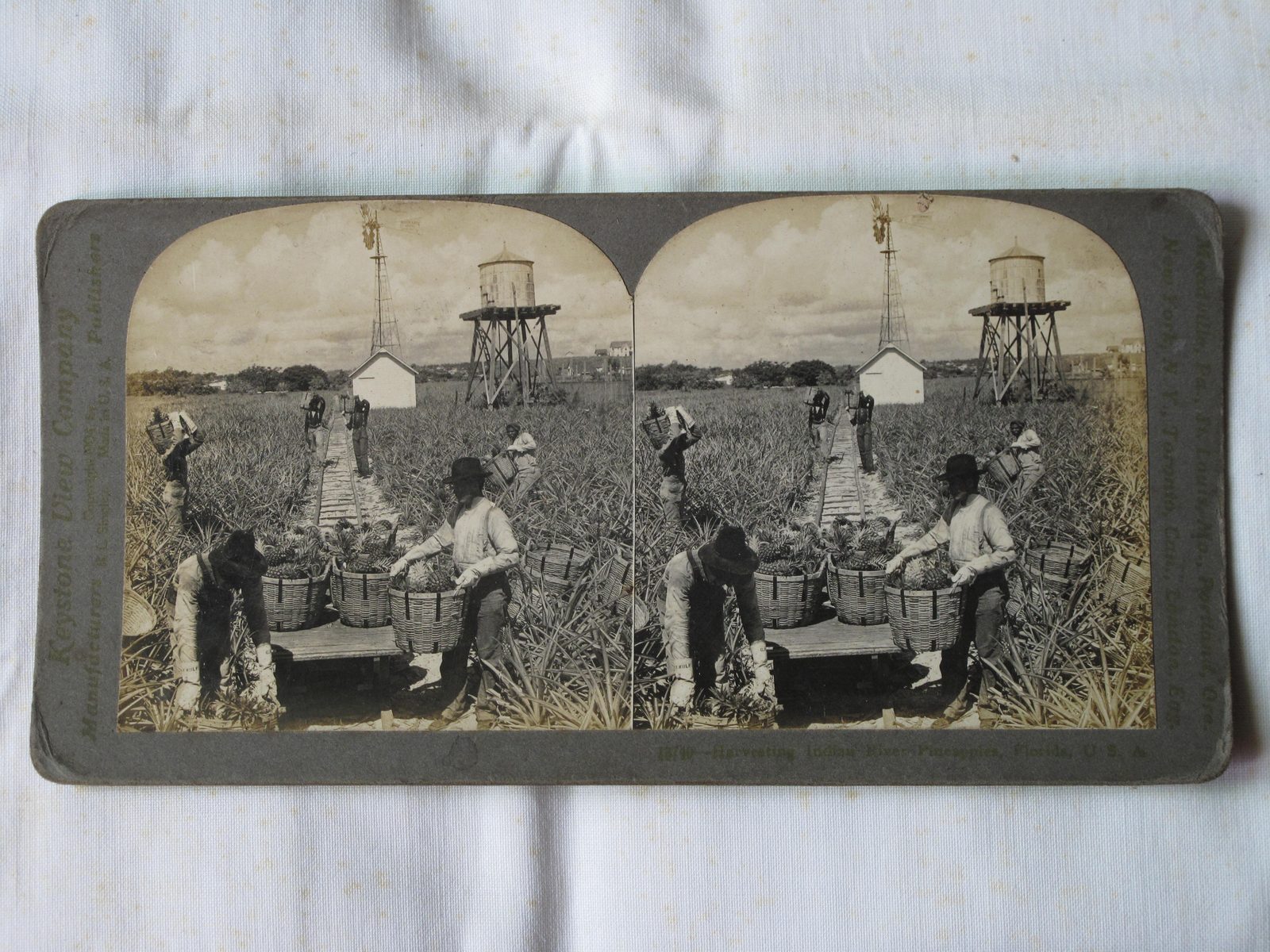
Before citrus became the dominant crop of Florida’s east coast, pineapples reigned supreme. From the 1860s through the turn of the century, the Indian River region produced some of the finest pineapples in the world. Tariff changes and Cuban competition ended the era, but the pineapple planters established the agricultural infrastructure that made the citrus industry possible.
Settlement Era · Agriculture · St. Lucie County History
Modern Era
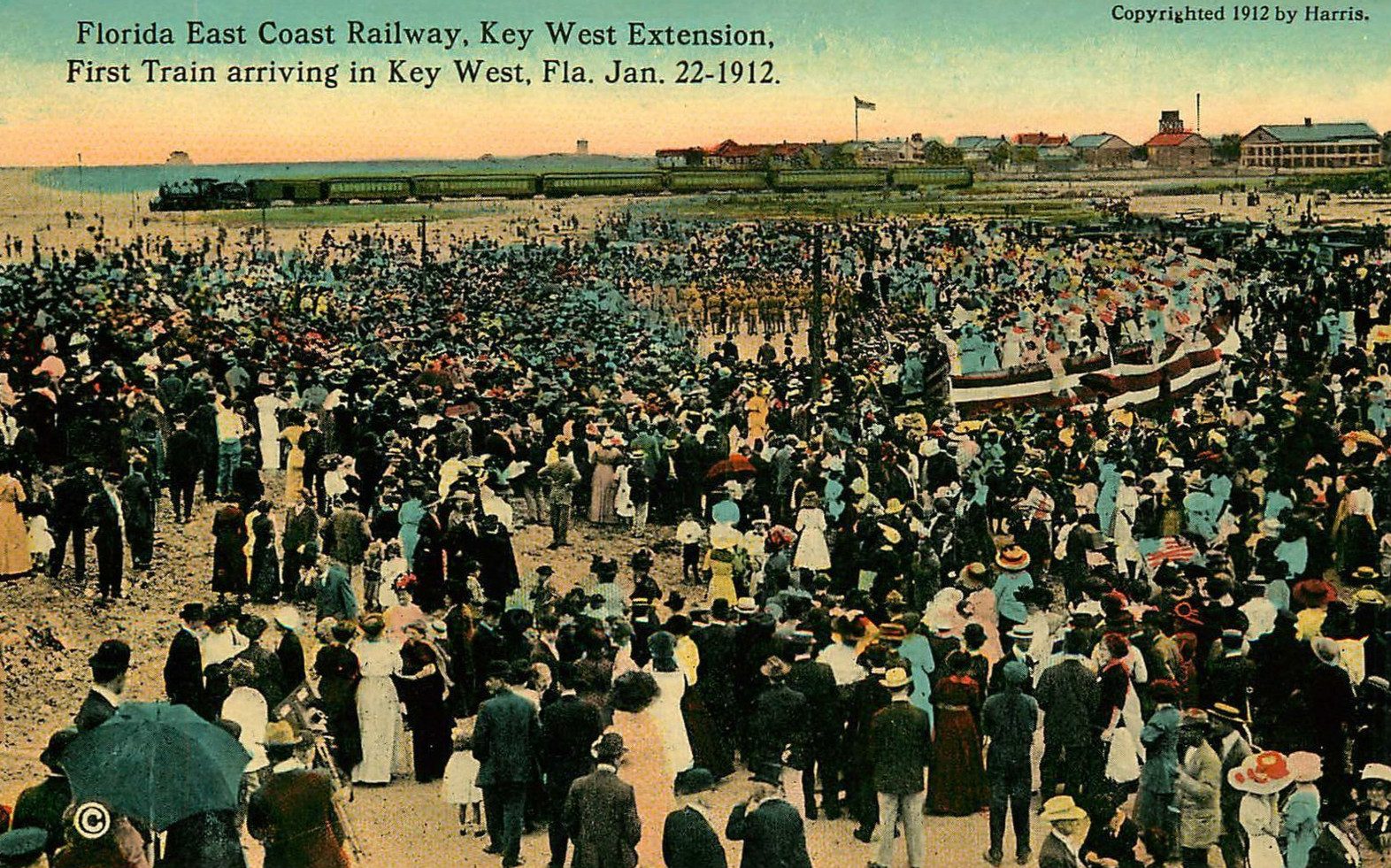
Henry Flagler’s Florida East Coast Railway reached the Indian River settlements in the 1890s, ending decades of isolation and making the citrus industry commercially viable. The railroad transformed the scattered homesteads of the Indian River coast into connected, growing communities and was the single greatest catalyst for the formation of St. Lucie County.
Modern Era · Transportation · St. Lucie County History
Modern Era
In 1961, the General Development Corporation incorporated Port St. Lucie on land that had been cattle ranch and pine flatwoods. The Mackle brothers marketed lots to buyers across the Northeast and Midwest through mail-order campaigns. From a population of roughly 330 in 1970, Port St. Lucie has grown into one of the largest cities in Florida, reshaping St. Lucie County’s identity.
Modern Era · Development · St. Lucie County History
Places
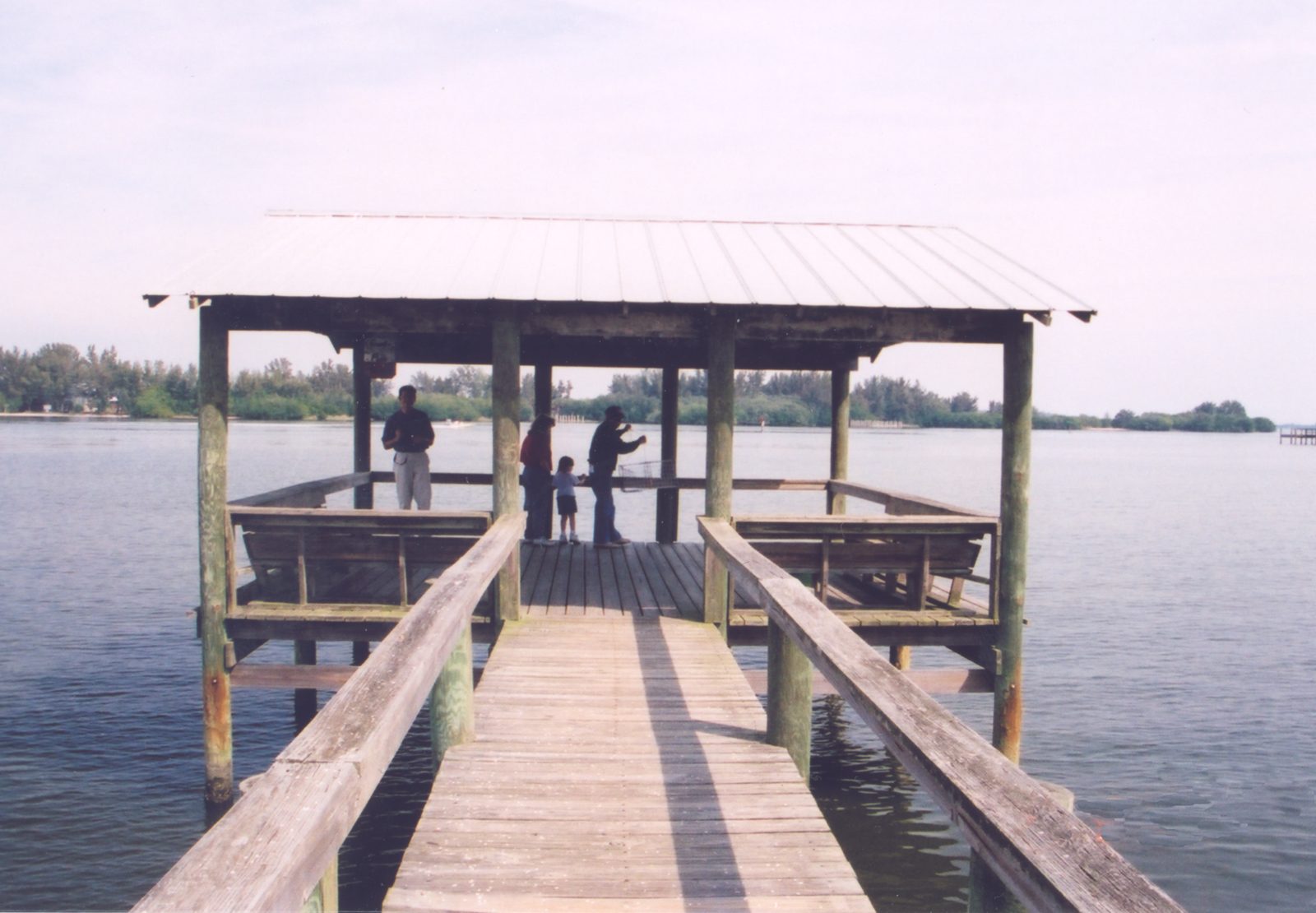
The Indian River Lagoon stretches 156 miles along Florida’s east coast, and St. Lucie County sits at its geographic and ecological heart. Recognized as one of the most biodiverse estuaries in North America, the lagoon has sustained human communities for thousands of years, from the Ais people to the citrus growers whose fruit bore the Indian River name. Today, the lagoon faces environmental challenges that threaten its future.
Places · Natural Heritage · St. Lucie County History
Places
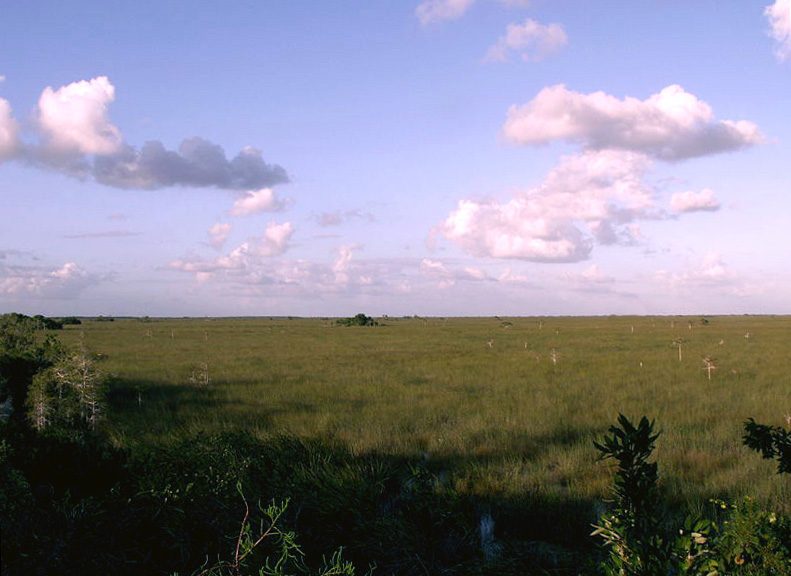
One of the last remaining freshwater marsh ecosystems on Florida’s east coast, the Savannas stretch through St. Lucie County as a living remnant of the pre-development landscape. Home to the Florida scrub-jay, gopher tortoises, and numerous rare plant species, the approximately 5,000-acre preserve is both a natural treasure and a window into the county’s ecological past.
Places · Conservation · St. Lucie County History
The St. Lucie Record is continuously expanding its archive. If you have a suggestion for a topic we should cover, or if you have historical materials to share, please get in touch. You can also explore Fort Pierce city history at our sister publication, The Fort Pierce Annals.