The formation of St. Lucie County in 1905 was the culmination of years of frustration, growth, and political effort by the settlers of Florida’s southern Indian River coast. For decades, these communities, scattered along the narrow strip of habitable land between the Atlantic Ocean and the vast interior prairies, had been governed from Titusville, the county seat of Brevard County, more than a hundred miles to the north. The journey to conduct even the most basic county business required days of travel by boat or, after the 1890s, a long trip by rail.
As the population of the southern settlements grew, driven by the arrival of the Florida East Coast Railway and the booming pineapple and citrus industries, the case for a separate county became overwhelming. When the Florida Legislature finally acted on May 24, 1905, creating St. Lucie County from the southern portion of Brevard County, it marked a decisive turning point in the history of the Treasure Coast. The new county, named for the St. Lucie River and the ancient Spanish fort from which the river took its name, would itself be subdivided multiple times in the decades that followed, but the act of formation remains the foundational moment of St. Lucie County’s identity as a distinct political and cultural community.
Life under Brevard County
To understand why the settlers of the southern Indian River fought so hard for their own county, one must appreciate the sheer geographical scale of Brevard County in the late nineteenth century. At its greatest extent, Brevard County stretched along nearly the entire length of Florida’s central east coast, from the area around Cape Canaveral southward to well beyond the St. Lucie River. The county seat was Titusville, a small town on the northern Indian River near present-day Kennedy Space Center. For the homesteaders, fishermen, and farmers living near what would become Fort Pierce, Eden, Jensen, and Stuart, Titusville might as well have been in another state.
Before the railroad arrived, the Indian River itself was the primary highway for the communities along its shore. Sloops and small steamboats carried passengers, mail, and cargo between settlements, but the journey from the southern reaches of the county to Titusville was long and uncertain. A round trip could easily consume a week, depending on weather and tides. Any resident who needed to file a land deed, appear in court, pay taxes, register a birth or death, or conduct any other business with the county government faced this arduous journey. Many settlers simply did without, relying on informal arrangements and avoiding county services whenever possible.
The arrival of Henry Flagler’s Florida East Coast Railway in the early 1890s transformed travel along the coast but did not eliminate the fundamental problem. The railroad made the trip to Titusville faster, hours instead of days, but it was still a significant journey that required time and expense. More importantly, the railroad spurred rapid population growth in the southern settlements. New arrivals from northern states came to plant pineapples and citrus, to fish the rich waters of the Indian River Lagoon, and to establish businesses in the growing towns along the rail line. The population increase made the distance from Titusville impractical as a matter of governance.
Definition: county seat
A county seat is the city or town that serves as the administrative center of a county. It is typically the location of the county courthouse, county government offices, and the primary offices of the county clerk, sheriff, tax collector, and other county officials. In frontier-era Florida, the county seat held particular importance because residents often had to travel to it in person for legal and administrative matters. The distance between residents and their county seat was one of the most common reasons for the creation of new counties throughout the nineteenth and early twentieth centuries.
Brevard County’s government, based in distant Titusville, faced difficult political dynamics. The population and tax base of the northern portion of the county naturally dominated county politics. Representatives from the Titusville area had little incentive to support the creation of a new county that would reduce Brevard’s territory, population, and tax revenue. The southern settlers would need to make their case directly to the Florida Legislature.
The push for independence
The movement to create a separate county from the southern portion of Brevard gained momentum in the late 1890s and early 1900s. Several factors converged to make the political climate favorable. The population of the region around Fort Pierce, Jensen, Eden, White City, and other settlements had grown substantially, thanks in large part to the railroad.
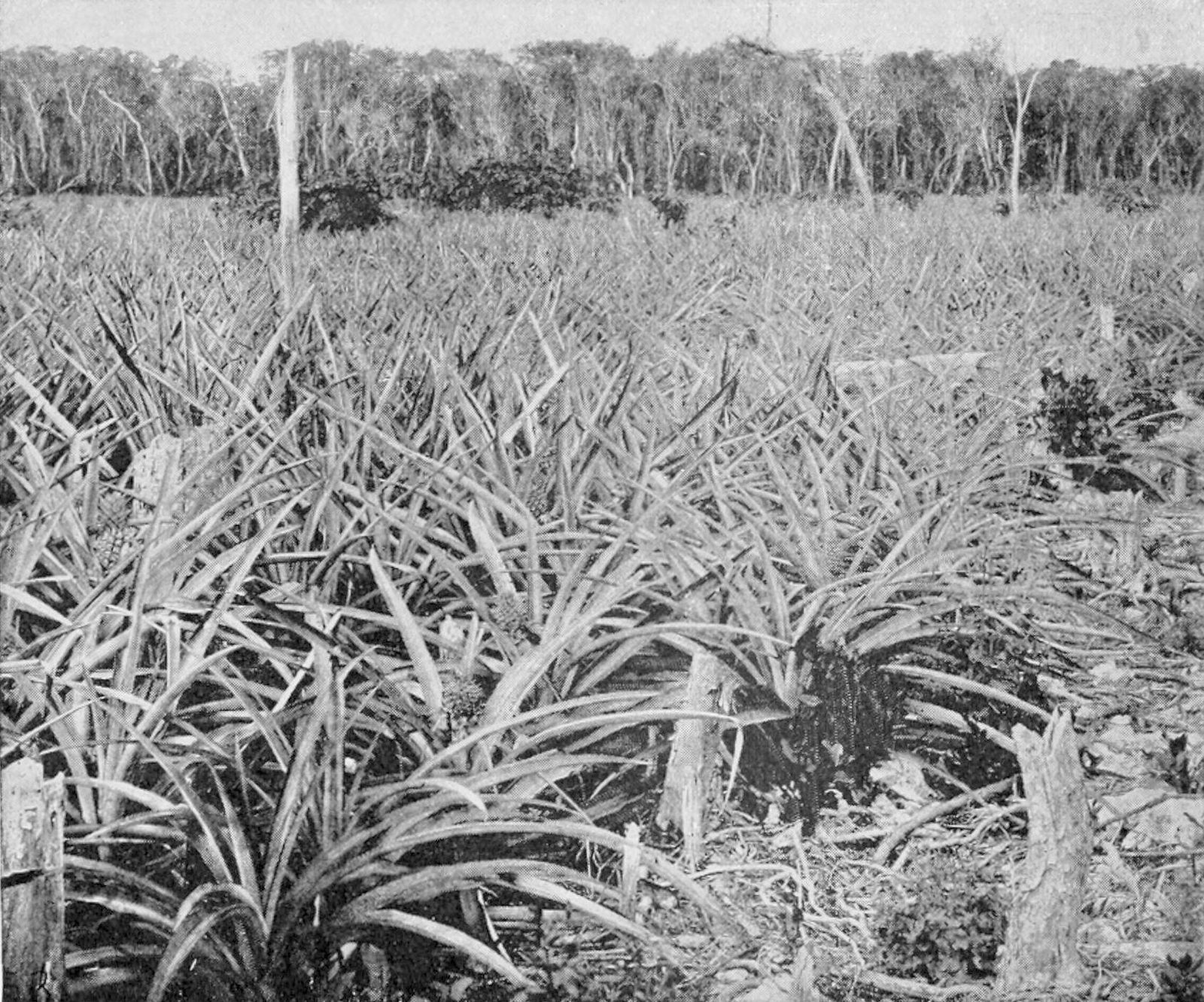
The pineapple industry, which had flourished along the Indian River since the 1860s, had attracted settlers and capital to the area. Citrus cultivation was expanding rapidly as growers discovered that the frost-resistant microclimates of the Indian River coast were ideal for producing high-quality oranges and grapefruit. The commercial fishing industry was growing as well, with Fort Pierce emerging as a center for the harvest of fish, oysters, and turtles from the Indian River Lagoon.
The residents of the southern settlements organized themselves to petition the Florida Legislature for the creation of a new county. Community leaders in Fort Pierce, the largest town in the region, took the lead in the effort. They argued that the population and economic activity of the southern Indian River coast had reached a level that justified self-governance, and that the distance from Titusville imposed an unreasonable burden on citizens who needed access to county government services. The petitioners also pointed to the difficulty of law enforcement in such a geographically vast county, the Brevard County sheriff, based in Titusville, could not effectively police communities a hundred miles to the south.
The effort was not without opposition. Some residents worried about the additional tax burden a new county government would impose, while Brevard County’s political establishment naturally resisted the loss of territory and revenue. But the momentum was on the side of the separatists, and the practical arguments in favor of a new county were difficult to refute.
The formation of St. Lucie County, May 24, 1905
On May 24, 1905, the Florida Legislature passed the act creating St. Lucie County from the southern portion of Brevard County. The new county encompassed a vast territory, stretching from roughly the area of Sebastian Inlet in the north to the area around Stuart and the St. Lucie Inlet in the south, and extending westward into the interior prairies and wetlands toward Lake Okeechobee. It was, at its creation, one of the largest counties in Florida by land area.
The county was named for the St. Lucie River, the major waterway of the region, which in turn had been named for Fort Santa Lucia, a Spanish fortification established in the 1500s along the coast of what is now St. Lucie County. The Spanish fort, part of Spain’s broader effort to establish a presence along the Florida coast, was short-lived, but the name persisted in the geography of the region.
The St. Lucie River, the St. Lucie Inlet, and now St. Lucie County all carried the name of that distant colonial outpost, connecting the newly formed county to a history that stretched back nearly four centuries before its founding. For more on the native peoples and early colonial encounters that preceded European settlement, see our Native History section.
The act designated Fort Pierce as the county seat of the new St. Lucie County. Fort Pierce was the logical choice: it was the largest settlement in the region, the primary stop on the Florida East Coast Railway between Titusville and West Palm Beach, and the commercial hub for the surrounding agricultural and fishing communities.
The town had been named for a U.S. Army post established during the Second Seminole War in the late 1830s, and by 1905 it had grown from a tiny cluster of buildings on the Indian River into a functioning town with stores, churches, a school, and a growing permanent population. For more on the history of the county seat itself, see The Fort Pierce Annals.
Fort Pierce as county seat
With the creation of St. Lucie County, Fort Pierce assumed a new role as the center of government for a sprawling territory. The role came with a condition: as The St. Lucie County Tribune reported in its first weeks, the law creating the county made Fort Pierce the temporary county site. The town took the word temporary seriously. That first summer the Fort Pierce Board of Trade resolved that the town should furnish a good site for the county buildings, reasoning that a town so honored customarily offered some inducement to secure the permanent seat, and that every property in town would gain by it.
The new county government started with almost nothing. In September 1905 a writer in the Tribune, opposing a proposal that the county take up the abstract business, could rest his argument on the plain condition of things: the county was without a courthouse, without a jail, without a clerk’s office, and without a safe place to keep the record books if it had them. The gaps began to close that fall. By late October the paper reported that the clerk’s office awaited only some delayed material to be ready for occupancy, and that the courthouse lot was being cleared and graded into a convenient site for the county buildings.
The courtroom question was settled with a rental. In February 1906, with the transfer of the courthouse site to the county in the attorneys’ hands, the commissioners rented the Improvement Club’s hall in Fort Pierce as a courtroom for the ensuing year. The circuit court convened there on Monday, February 19, 1906, with Judge Minor S. Jones of Titusville presiding and John C. Jones of Orlando as state attorney; the Tribune noted that the docket held only a small number of unimportant cases.
Building went less smoothly than renting. A clerk’s office was among the county’s first works, and a new jail followed it into contention: by August 1906 a second lawsuit was asking the court to restrain the erection of the jail and the payment of the warrants issued for it. That same month the rented hall did double duty, serving as the Fort Pierce polling place when the year-old county took a large public question to the polls and voted itself dry.
The courthouse itself waited four years, and the wait ended in an argument about money. In May 1909 the commissioners prepared to receive bids on accepted plans costing about $30,000, while a petition, scantily signed, asked for a $10,000 building instead. The Fort Pierce News sided with the larger plan: a cheap public building, the paper argued, always proves the costliest, and the county should build a courthouse that would be a credit to it.
The cornerstone was laid on the afternoon of Wednesday, September 22, 1909, with Masonic ceremonies. Both sides of Pine Street were crowded as the procession formed, headed by the Fort Pierce band and followed by the Masons, the two hundred and fifty pupils of the Fort Pierce High School, and about as many citizens again. Prosecuting Attorney John C. Jones addressed the crowd at the courthouse, calling on the citizens of St. Lucie County to guard the county’s every interest, to let no act bring discredit on the hall of justice rising over the stone, and, as jurors, to see that no one was punished unjustly and that no violator of the law escaped.
Sealed inside the marble cornerstone went a list of the county and city officers, copies of the local newspapers, a contract of the Florida Citrus Exchange, a half dollar and a penny of 1909, and the roster of the Fort Pierce Masonic lodge. The week before, the Tribune had reported that a $750 clock for the courthouse tower was assured.
The building was finished that winter. In January 1910 the contractor, the Mutual Construction Company, receipted the county in full for the contract price and the extra work, a thousand dollars excepted under a conditional settlement. On Tuesday morning, February 15, 1910, the circuit court convened in the new courthouse for the first time, Judge Minor S. Jones presiding as he had in the rented hall four years earlier, and scores of visitors took their first look at the completed building from the seats of its spacious courtroom. The county that had begun without so much as a clerk’s office had taken not quite five years to build itself a courthouse.
Fort Pierce itself grew rapidly in the years following the county’s formation. Having already incorporated as a city in 1901, its dual status as county seat and incorporated municipality brought new investment and civic infrastructure. Banks, hotels, and commercial establishments opened to serve the growing population, and the city’s waterfront along the Indian River became a bustling center of commerce.
The subdivisions: Martin, Indian River, and Okeechobee
The St. Lucie County that was created in 1905 bore little resemblance in geographic extent to the county that exists today. At its creation, St. Lucie County was enormous, encompassing territory that would eventually be divided into four separate counties. The subdivisions began just twelve years after the county’s formation and continued for two decades, reflecting the same forces of population growth and geographic distance that had led to the creation of St. Lucie County itself in the first place.
Separation was spoken of long before it happened. In November 1910 a correspondent in the Tribune, exasperated by a mired road north of town, warned that some action must be taken unless Fort Pierce was satisfied to be separated from the northern part of St. Lucie County. It was a figure of speech that day, spent on a bad road. Within fifteen years it was a map.
The first subdivision came in 1917, when the Florida Legislature created Okeechobee County from the western interior portion of St. Lucie County’s territory. The communities around Lake Okeechobee were geographically and economically distinct from the coastal settlements along the Indian River. The cattle ranchers and farmers of the interior prairie had little in common with the citrus growers and fishermen of the coast, and the distance from the lake region to Fort Pierce was substantial. The creation of Okeechobee County, with the town of Okeechobee as its seat, gave the interior communities their own local government.
The more significant subdivisions came in 1925, when the Florida Legislature carved two new counties from what remained of St. Lucie County. Martin County was created from St. Lucie’s southern portion, encompassing the communities of Stuart, Jensen Beach, Hobe Sound, and Indiantown. The new county was named for John W. Martin, the Governor of Florida at the time. Stuart became the county seat of Martin County. To the north, Indian River County was created from St. Lucie’s northern portion, encompassing the communities of Vero Beach, Sebastian, and Fellsmere. Vero Beach became the county seat of Indian River County.
The 1925 subdivisions left St. Lucie County with roughly the boundaries it holds today, a compact coastal county centered on Fort Pierce and bounded by Indian River County to the north, Martin County to the south, Okeechobee County to the west, and the Atlantic Ocean to the east. In less than twenty years, the once-vast county had been reduced to a fraction of its original size.
The pattern was not unusual in Florida history, many of the state’s original counties were subdivided repeatedly as population growth made large territorial counties impractical. Florida went from twenty-two counties in 1845 to sixty-seven counties by 1925, a reflection of the rapid settlement and development of the state in the late nineteenth and early twentieth centuries.
Legacy of the formation
The formation of St. Lucie County in 1905 was a milestone in the history of the Treasure Coast. It marked the moment when the communities of the southern Indian River ceased to be a distant appendage of Brevard County and became a self-governing political entity with its own identity, its own leadership, and its own vision for the future. The act of formation set in motion the civic development that would shape the region for the century to come, the building of courthouses and schools, the establishment of law enforcement and public services, the creation of a county government responsive to local needs.
The early economy of St. Lucie County was rooted in the land and the water. Pineapple plantations, the dominant agricultural enterprise of the Indian River coast since the 1860s, were still the county’s great crop at its creation: the growers’ record season came as late as 1909, when the Fort Pierce News called St. Lucie the banner pineapple county in the state, even as the industry fought Cuban imports over tariffs and freight rates.
Citrus, whose groves of oranges and grapefruit were being planted in the years surrounding the county’s formation, would in time take pineapple’s place and define the county’s agricultural landscape for the next century. The commercial fishing industry continued to thrive, with Fort Pierce serving as a major center for the harvest of fish, shrimp, and shellfish from the Indian River Lagoon and the Atlantic coast. Together, agriculture and fishing formed the economic foundation upon which St. Lucie County built its early civic life.
The subdivisions of 1917 and 1925, while reducing St. Lucie County’s physical territory, validated the very principle that had driven its own creation: that communities deserve local government close enough to understand their needs. The four counties carved from the original St. Lucie County territory now form the core of what is commonly known as the Treasure Coast, a region whose shared history and interconnected geography continue to bind its communities together.
Today, St. Lucie County is home to more than 350,000 residents and includes the cities of Fort Pierce, Port St. Lucie, and St. Lucie Village. The county seat remains in Fort Pierce, where the courthouse of 1910 was the first the county built for itself. The county’s history is a story of transformation, but the formation of St. Lucie County in 1905 remains the hinge on which much of that story turns.
The first-decade material on this page is drawn from Fort Pierce’s two weekly papers, digitized by the Library of Congress in Chronicling America and in the public domain: The St. Lucie County Tribune of July 28, 1905 (the temporary county site), September 22, 1905 (a county without a courthouse), February 16, 1906 (the rented hall) and September 24, 1909 (the cornerstone), and the Fort Pierce News of May 14, 1909 (the courthouse argument) and February 18, 1910 (the first court in the new building).