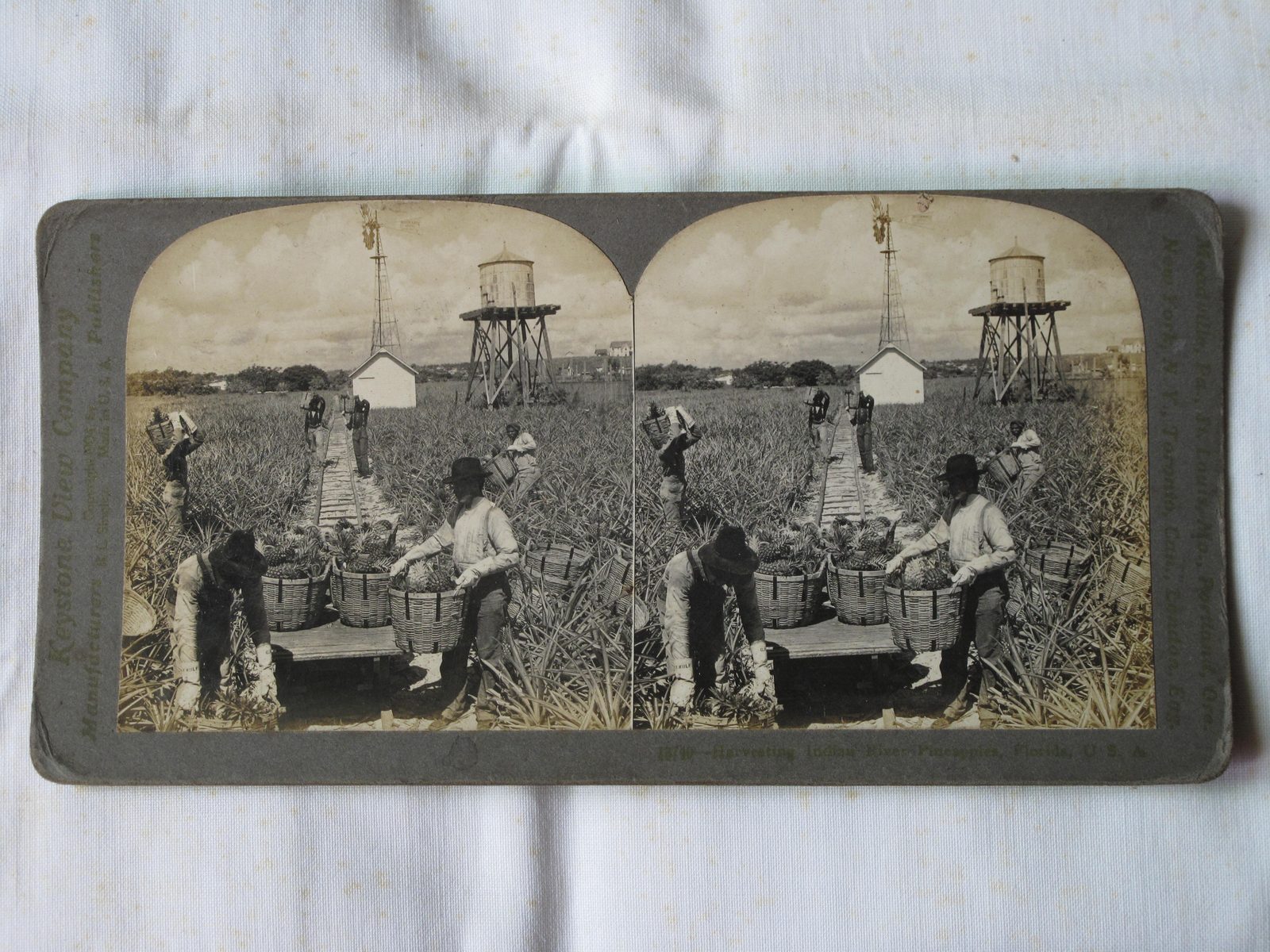
Long before the Indian River corridor became synonymous with oranges and grapefruit, a different crop dominated the sandy soils of Florida’s southeast coast. From the 1860s into the second decade of the twentieth century, pineapple cultivation was one of the most important agricultural enterprises in the region that would become St. Lucie County. Settlers arriving in the years after the Civil War discovered that the warm subtropical climate, the well-drained sandy soil, and the moderating influence of the Indian River Lagoon created conditions favorable for growing pineapples.
For roughly half a century, the pineapple plantations of the Indian River made this remote stretch of Florida coastline one of the leading pineapple-producing areas in the entire United States. The industry attracted settlers, established patterns of land use and commerce, and built the agricultural infrastructure that would later support the citrus industry. When pineapple cultivation finally declined, a victim of tariff changes, devastating freezes, and foreign competition, it left behind a legacy that shaped the economic and social character of the Treasure Coast for generations to come.
The golden era of Florida pineapples
Pineapple cultivation in Florida dates to at least the 1860s, when settlers along the southeast coast began experimenting with the fruit on a commercial scale. The pineapple plant (Ananas comosus), native to South America, had been grown in small quantities in Florida for decades before that, but it was in the years following the Civil War that the industry took root. Homesteaders who claimed land along the Indian River under the Homestead Act of 1862 found that pineapples were among the most profitable crops they could grow in the region’s sandy, acidic soils.
By the 1870s and 1880s, pineapple plantations had spread along a considerable stretch of Florida’s east coast, from the area around what is now Brevard County southward through the Indian River region and into what would later become St. Lucie, Martin, and Palm Beach counties. The industry grew rapidly. According to estimates from the period, Florida was producing hundreds of thousands of crates of pineapples annually by the early 1890s, with the Indian River region accounting for a substantial share of the total output. The fruit was prized in northern markets for its sweetness and quality, and demand generally outpaced supply during the peak years of the industry.
The pineapple era coincided with a broader period of settlement and development along the Indian River. Communities that would later become important towns, including Fort Pierce, Eden, Jensen, and others along the southern Indian River, owed much of their early growth to the pineapple trade. The industry brought settlers, capital, and commercial activity to an area that had been sparsely inhabited only a generation earlier. In this sense, the pineapple plantations were foundational to the settlement history of what would become St. Lucie County.
Cultivation on the Indian River
The Indian River District
The Indian River District refers to the narrow agricultural corridor along Florida’s east coast, stretching roughly from Daytona Beach south to West Palm Beach. Named for the Indian River Lagoon, a 156-mile estuary running parallel to the Atlantic coast, the district encompasses a strip of land between the lagoon and the ocean where the warm waters moderate temperatures and create a favorable microclimate for subtropical crops. During the nineteenth and early twentieth centuries, the Indian River District was the center of Florida’s pineapple industry; it later became world-famous for its citrus production. The region includes lands that were originally part of Brevard County and later became parts of St. Lucie, Martin, and Indian River counties.
The geography and climate of the Indian River corridor gave pineapple growers a distinct advantage. The Indian River Lagoon, a broad, shallow body of warm water running parallel to the coast, served as a natural heat reservoir. On cold nights, the lagoon radiated stored warmth into the surrounding air, protecting nearby crops from the brief but potentially damaging frosts that occasionally reached the region. This moderating effect was not sufficient to make the area entirely frost-free, as growers would learn to their sorrow, but it provided a meaningful degree of protection that more inland locations lacked.
The soils were equally important. The sandy, well-drained soils of the coastal ridge were naturally acidic, a condition pineapple plants favor. Unlike heavier clay soils that retain moisture and can cause root rot, the sandy soils allowed excess water to drain away quickly while still providing adequate nutrients for the shallow-rooted pineapple plants. Growers supplemented the naturally poor soils with organic matter, including fish scraps and seaweed gathered from the Indian River, a practice that took advantage of locally abundant resources.
Captain Thomas E. Richards was among the notable early pineapple growers in the region. Richards, who settled in the area around Eden on the southern Indian River in the 1880s, became one of the most successful pineapple farmers on the coast. Eden, located south of Fort Pierce in what is now Martin County but was then part of the vast territory of Brevard County (and later part of St. Lucie County before Martin County was carved from it in 1925), emerged as one of the most productive pineapple centers on the Indian River. The community’s name itself evoked the fertility and promise of the land.
Varieties and methods
Indian River growers cultivated several varieties of pineapple, each with distinct characteristics suited to different markets and growing conditions. The Red Spanish variety was the most widely grown, valued for its hardiness and its ability to withstand the rigors of shipping. Red Spanish pineapples were smaller than some other varieties but had a firm, fibrous flesh that traveled well, an essential quality in an era when fresh fruit had to survive days of transport by wagon, boat, and later by rail before reaching consumers in distant cities.
The Egyptian Queen, also known simply as the Queen pineapple, was prized for its sweeter, more delicate flavor and golden flesh. It was a smaller fruit than the Red Spanish and somewhat more fragile, making it more challenging to ship. Nevertheless, Queen pineapples commanded premium prices in northern markets, and growers who could successfully deliver them found eager buyers. The Smooth Cayenne, a larger variety that would eventually become the dominant commercial pineapple worldwide, was also grown by some Indian River planters, though it was less common in Florida during this period than the Red Spanish and Egyptian Queen.
Pineapple cultivation was labor-intensive work. Unlike tree crops that could be harvested mechanically or with simple hand tools, pineapples required close attention at every stage of growth. Each plant produced a single fruit from its central stem, and that fruit took between eighteen and twenty months to mature from planting to harvest. Growers planted pineapple slips, small vegetative shoots taken from mature plants, in prepared rows, typically spaced closely enough to make efficient use of the land but with enough room to allow workers to move between the plants for weeding and harvesting.
Many growers constructed shade structures known as “pineapple sheds” to protect their crops from the intense subtropical sun and from occasional frost. These sheds, typically built of wooden frameworks covered with slat boards or palmetto fronds, filtered sunlight and provided a degree of insulation against cold. The construction and maintenance of pineapple sheds represented a significant investment of labor and materials, adding to the overall cost of production. Some growers opted to cultivate their pineapples in open fields without sheds, accepting the greater risk of sun damage and frost injury in exchange for lower overhead costs.
Harvesting was done entirely by hand. Workers moved through the rows cutting ripe pineapples from their stems and carefully placing them in crates for transport. Because not all fruit on a plantation ripened at the same time, harvesting was a protracted process that required repeated passes through the fields. The harvested fruit was then transported to the nearest dock or, after the arrival of the railroad, to the nearest rail station for shipment to market.
The market and the railroad
Before the arrival of the Florida East Coast Railway in the 1890s, pineapple growers along the Indian River relied on water transportation to move their crop to market. The Indian River itself served as the primary commercial highway of the region. Sloops, schooners, and small steamboats carried crates of pineapples from the docks at Eden, Fort Pierce, Jensen, and other river communities northward to points where the fruit could be transferred to larger vessels or to rail connections for shipment to Jacksonville and beyond.
This water-based transportation system was functional but limited. It was slow, subject to weather delays, and could not handle large volumes efficiently. The perishable nature of pineapples made speed essential, fruit that was fresh and fragrant when it left the dock could arrive bruised and overripe after days of slow travel. These logistical constraints placed a natural ceiling on the growth of the industry and on the prices growers could obtain.
Henry Flagler’s Florida East Coast Railway transformed the equation. When the railroad extended southward through the Indian River region in the mid-1890s, it provided growers with fast, reliable access to northern markets. Pineapple crates that had previously taken days to reach Jacksonville by boat could now be loaded onto rail cars and shipped directly to New York, Philadelphia, and other major cities. The speed of rail transport meant that fruit arrived fresher, reducing spoilage losses and allowing growers to command better prices.
The railroad also stimulated the pineapple industry by making it easier for settlers and laborers to reach the Indian River region. New arrivals from the North, attracted by reports of the profitable pineapple trade, came south by rail and established new plantations. For a brief period in the early 1890s, the combination of the railroad’s arrival and strong market demand created an atmosphere of optimism and expansion in the Indian River pineapple district.
The blows of the 1890s
The 1890s dealt the industry two blows in quick succession, and for a time they looked fatal. The county’s own newspapers would later show that they were not. But the blows were real, and the recovery was earned crate by crate.
The Wilson-Gorman Tariff Act of 1894 was a heavy blow to the young Florida pineapple industry. This federal legislation significantly reduced import duties on a range of agricultural products, including pineapples. Before the tariff reduction, Florida pineapple growers had benefited from protective tariffs that made imported pineapples, particularly those from Cuba, the Bahamas, and other Caribbean sources, more expensive in American markets. The Wilson-Gorman Tariff lowered these barriers, allowing cheaply produced Caribbean pineapples to flood the American market at prices that Florida growers could not match.
Cuban pineapple production, in particular, posed an existential threat. Cuban growers enjoyed lower labor costs, a longer growing season, and proximity to major shipping routes. They could produce and deliver pineapples to American ports at a fraction of what it cost Florida growers to grow and ship the same fruit. With the protective tariff reduced, Cuban pineapples rapidly undercut Florida fruit on price, and buyers who had once purchased Indian River pineapples began turning to the cheaper imported product.
Compounding the tariff disaster was the Great Freeze of 1894–1895, one of the most destructive natural events in Florida agricultural history. In December 1894, a severe freeze swept across the state, damaging crops and killing subtropical plants. A second, even more devastating freeze struck in February 1895, finishing off plants and trees that had been weakened by the earlier event. Pineapple plantations across the Indian River region were severely damaged. Unlike citrus trees, which could sometimes recover from freeze damage if the root systems survived, pineapple plants were particularly vulnerable to cold and were often killed outright.
How hard the blows landed is on the record, in the growers’ own numbers: a petition to Congress printed in The St. Lucie County Tribune in July 1909 put the whole Florida crop of 1897 at just 106,000 crates. The same petition tells what happened next, and it is not the story of an industry that died. The crop increased every year afterward, to about 725,000 crates in 1908 and over 1,000,000 crates in 1909, grown on more than 7,000 cleared and planted acres carrying an investment the growers put at three to four million dollars. The industry that the freeze and the tariff were supposed to have killed spent the following decade growing to its record.
The banner pineapple county
When St. Lucie County was created in 1905, the pineapple was its great crop, and the county’s two weekly papers treated it that way. Through the digitized files of The St. Lucie County Tribune and the Fort Pierce News, 1905 to 1911, no subject fills more pages: the plantings, the standing weekly columns from the pineapple towns of Jensen, Eden, Ankona, White City and Viking, and above all the shipping season, which took over the papers each May, June and July as the crop moved north. In December 1908 the News put the county’s standing plainly: St. Lucie was the banner pineapple county in the state, producing over half the crop of the entire state.
The record years did not feel safe from inside them. The industry’s running fight, on the Tribune’s front page through the summer of 1909, was with Cuba, and the arithmetic was freight as much as tariff: a crate of Cuban pineapples traveled to the same markets for 26 cents less than a Florida crate paid, about 78 dollars a car, and the Cuban fruit arrived two or three days earlier.
The paper reported the growers stirred over the unfair rates, an industry facing ruin unless matters improved, and demanding protection of not less than a cent a pound. That July the growers circulated a petition at the shipping points along the coast asking Congress to keep the pineapple duty the Senate had adopted, and sent it to Washington. Two years before that summer the growers had pledged two cents on every crate toward opening the inlet at Sewalls Point; that campaign has its own page, Open the inlet: the St. Lucie Inlet fight, 1907 to 1911.
The growers also answered with organization. In June 1909 the News reported a growers’ association in its first season and expected, if it succeeded, sister organizations through the pineapple towns, Stuart, Jensen, Eden, Walton, Ankona, White City, Fort Pierce, St. Lucie and Viking, until the whole belt was amalgamated into one body with every grower a working member, on the model of the California orange growers. In the marketing of the crop, the paper wrote, as much as in tariff and transportation, lay the future of the pineapple industry of St. Lucie, Palm Beach and Dade counties.
The digitized files end in December 1911 with the industry still the largest subject in the county’s papers. Its final decline came in the years beyond these pages. What the papers of 1905 to 1911 preserve is the industry at its height: the banner county, the record crop, and the growers organizing to defend both.
From pineapples to citrus
The decline of the pineapple industry did not mean the end of agriculture along the Indian River. Many former pineapple growers turned to citrus cultivation, which was already gaining momentum in the region during the 1890s. Citrus trees were better adapted to the occasional cold snaps that reached the Indian River, and the demand for Indian River oranges and grapefruit was growing steadily in northern markets.
The transition from pineapples to citrus was gradual for some growers and abrupt for others, and it came later than is often told: through 1911 the pineapple still dominated the county’s own newspapers, with citrus rising beside it. In the years that followed, citrus took pineapple’s place as the dominant crop of the Indian River region.
The pineapple era left an important legacy that facilitated this transition. The pineapple planters had cleared land, built roads and docks, established commercial relationships with northern buyers, and created a culture of subtropical agriculture in a region that had been wilderness just decades earlier. The infrastructure they built, the docks, the packing facilities, the transportation networks, was directly transferable to the citrus industry. In many cases, the same families who had grown pineapples simply planted citrus trees on land that had recently supported pineapple fields.
The settlement patterns established during the pineapple era also proved durable. Communities like Fort Pierce, Eden, and Jensen that had grown during the pineapple boom continued to develop as citrus centers. The formation of St. Lucie County in 1905, when the Florida Legislature carved the new county from the vast territory of Brevard County, reflected the growing population and economic maturity of communities that had been established in significant part by the pineapple industry.
The pineapple did not leave Florida all at once; the growers’ own record crop came as late as 1909. But in the years after the county’s digitized newspapers fall silent, the large-scale commercial pineapple industry that had characterized the Indian River region was gone, supplanted by the citrus groves that would define the area’s agricultural identity for the next century.
Today, virtually all commercial pineapple production in the United States takes place in Hawaii, far from the sandy fields where Indian River growers once tended their crops under the Florida sun. The pineapple plantations of the Indian River occupy a brief but significant chapter in the agricultural history of St. Lucie County, the first successful large-scale commercial agriculture in the region, and the foundation upon which the far larger citrus industry was built.
The county-era material on this page is drawn from the two Fort Pierce weeklies digitized by the Library of Congress in Chronicling America, both in the public domain: the Fort Pierce News of December 11, 1908 (the banner county) and June 4, 1909 (the growers’ association), and The St. Lucie County Tribune of June 4, 1909 (the freight-rate fight) and July 16, 1909 (the growers’ petition to Congress, with the acreage, investment and crop figures).