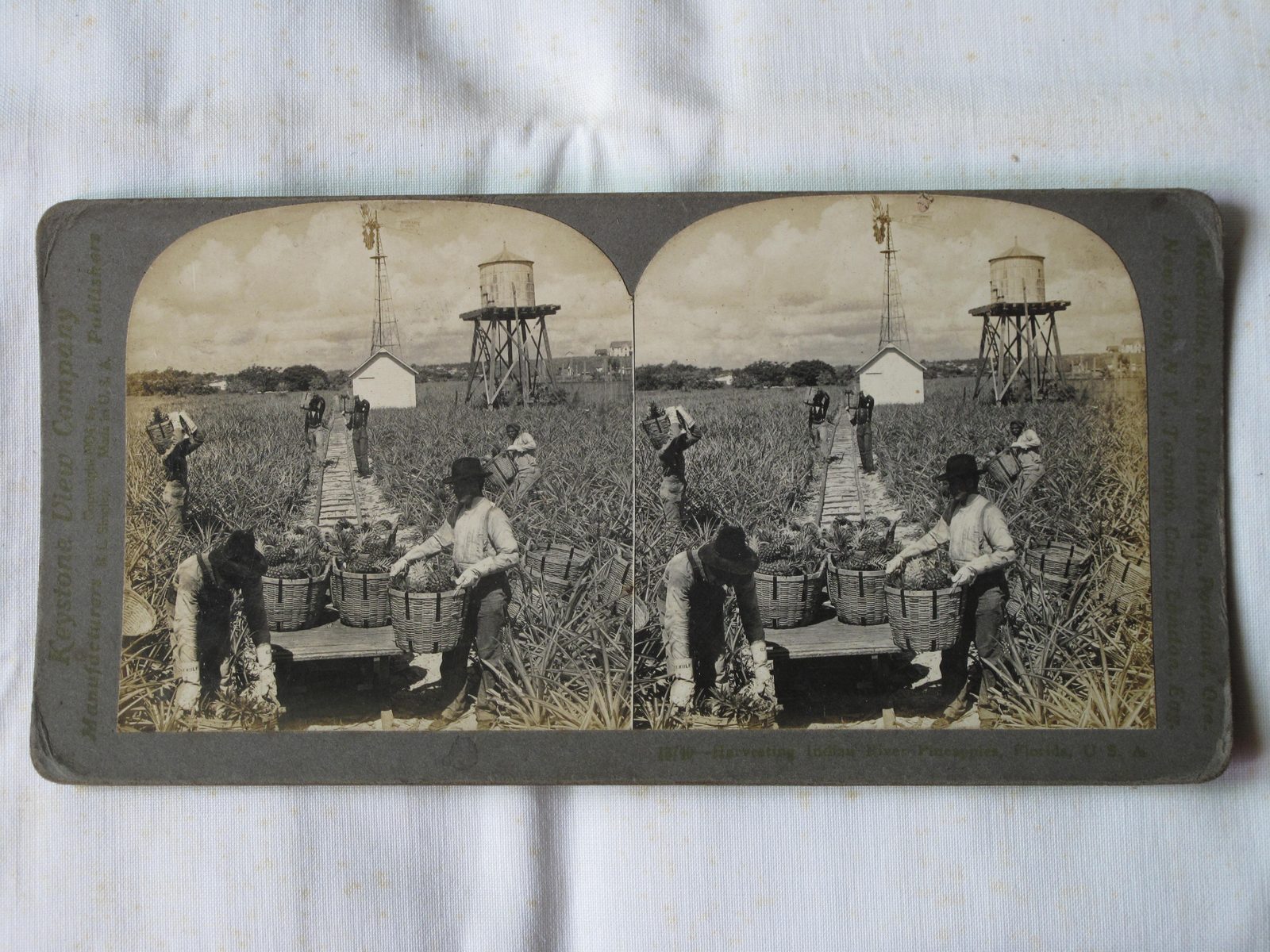
On November 26, 1909, the Fort Pierce News printed a legal notice from Ankona, Florida, a pineapple settlement on the Indian River. It was the charter of the Ankona Pineapple and Citrus Growers Association, printed in full, and it named three growers to run the association for its first year: R. V. Ankeny and Will L. Frantz of Ankona, and Edgar Lewis of neighboring Eldred. Eight weeks later the same paper printed a second charter from the same settlements. Between them, the two documents are the clearest picture the record holds of how Ankona’s growers meant to sell their crop.
Two charters in one winter
The first charter set up a horticultural association with no capital stock. It could never issue shares or pay a dividend. Each member held one certificate of membership, bought for a dollar, and no one could hold more than one. Only citrus growers could belong. Its stated purpose was mutual cooperation among Florida’s citrus and produce growers in the picking, packing, handling, shipping and marketing of their fruit. The News ran the notice again on December 3.
On January 21, 1910, the News printed the articles of the Pioneer Pineapple Growers Association. It was built the same way: no capital stock, not for profit, no shares and no dividends. Its first directors were Geo. A. Saeger and G. S. Saylor of Ankona and Hal S. Thomas of Eldred. A growers’ association was already in its first season in June 1909, and the page on the pineapple plantations of the Indian River follows that larger story. These two charters are Ankona’s part of it.
A packing company and its tramway
The growers already worked together before the charters. In April 1909 the Ankona Packing Company, whose members included P. D. Ankeny, R. V. Ankeny and Fletcher Russell, was busy building a tramway through its fields, to be ready for the coming crop. That same week Mr. and Mrs. Russell were enjoying trips on the river in a new sailboat he had built himself, and the Lewis family took their launch to Waveland on a Tuesday to pay a call.
The crop went out by crate. In March 1911 the crates arrived and the fruit was on the move, with some of the citrus already gone from the shipping platforms.
The Ankona Private School
Ankona kept a school of its own. The closing exercises of the Ankona Private School were held on the evening of Friday, May 21, 1909. In spite of the heat and the mosquitoes, a large crowd of friends and patrons came to see the children perform an operetta, A Day in the Woods, in a schoolroom decorated as a woodland bower. The new term opened on Tuesday, September 14, 1909.
A church shared with Eldred
Ankona had a church by 1907. On a Sunday that March the Rev. George Waldron preached at Eden in the morning, at the Ankona church at three in the afternoon, and then in the Jensen town hall. In the fall of 1909 Ankona was promised a Sunday morning service every two weeks from the first Sunday in November, to meet the needs of the people of Ankona, Eldred and the country around. It was to be conducted by the Rev. George Marsh, the Congregational pastor of Eden.
The two settlements shared a Sunday school as well. For Christmas Eve, 1909, a Friday, the Eldred and Ankona Sunday school planned a Christmas service of songs at the Ankona church.
Cards, and a freeze that was not
By 1911 Ankona had a euchre club, and in March its first extra meeting was held at an Eldred home, with Mrs. Edgar Lewis as joint hostess. The correspondent judged from the turnout that the members were in no hurry to give up their parties. The same week, the Tribune’s Ankona correspondent answered a letter from the frozen North that offered sympathy over the recent freeze and hoped Ankona had not been too badly hurt. The correspondent replied that there had been no freeze at all, and remarked on what a vague idea the outside world had of the size of Florida.
Ankona, Florida, in the county of 1905
Ankona was one of the river settlements of the new St. Lucie County, with Walton, Eldred and Eden for neighbors, and its people turn up in each other’s columns: the Eldred growers on its charters, its Sunday school shared with Eldred, its preacher sent from Eden. The page on Eden, Florida tells the story of the next settlement on the river, and the railroad that carried the crop is on the page on the Florida East Coast Railway.
Sources
This story is drawn from the two Fort Pierce weeklies of the day, The St. Lucie County Tribune and the Fort Pierce News, digitized by the Library of Congress in Chronicling America and in the public domain. The charter of the Ankona Pineapple and Citrus Growers Association is in the News of November 26, 1909 (page 8) and again on December 3, 1909 (page 3), and the Pioneer Pineapple Growers Association’s articles are in the News of January 21, 1910 (page 8).
The packing company, the tramway, the sailboat and the launch are in the Tribune of April 23, 1909 (page 3), and the crates of 1911 in the Tribune of March 24, 1911 (page 8). The school’s closing exercises are in the Tribune of June 4, 1909 (page 4) and its opening in the Tribune of September 17, 1909 (page 8). The 1907 preaching round is in the Tribune of March 1, 1907 (page 6), the Sunday service in the Tribune of October 29, 1909 (page 8), and the Christmas service of songs in the Tribune of December 24, 1909 (page 7). The euchre club and the letter about the freeze are in the Tribune of March 17, 1911 (page 8).
The Tribune has no surviving issues for 1908 and the News none for 1907, so some years of Ankona’s news survive in one paper only. Names on this page are given only where the scanned text reads them clearly.